

Custom Furniture vs Ready-Made Furniture: Which Fits a Whole-Home Project?
The best choice between custom furniture and ready-made furniture depends on what the room must do. Use custom pieces for fixed dimensions, storage, difficult corners, and a coordinated finish. Use ready-made pieces when a standard size is available, the item may move later, or you need it quickly. Most whole-home projects work better with a deliberate mix of both.
That answer sounds simple until you measure a sloping wall, coordinate a wardrobe with a door swing, or wait for a sofa that was meant to arrive in a different country. The decision becomes easier when you compare each room by fit, use, programme, and replacement plan.
What is custom furniture?
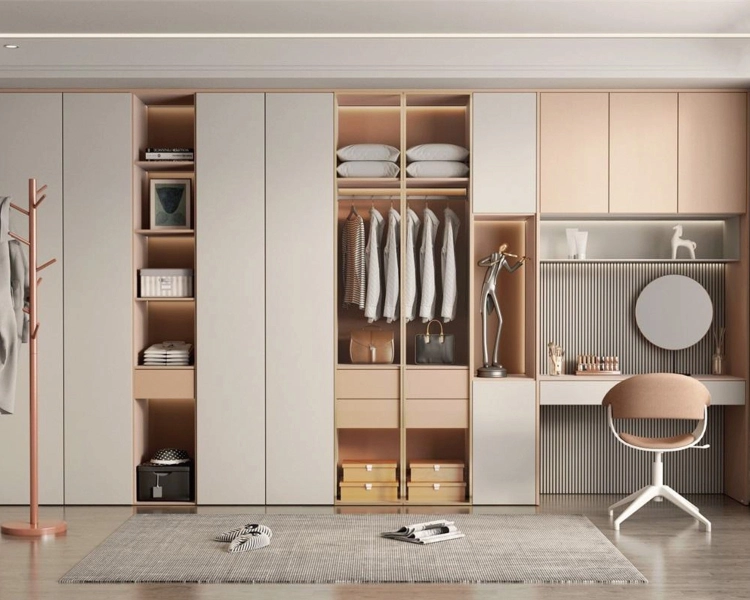
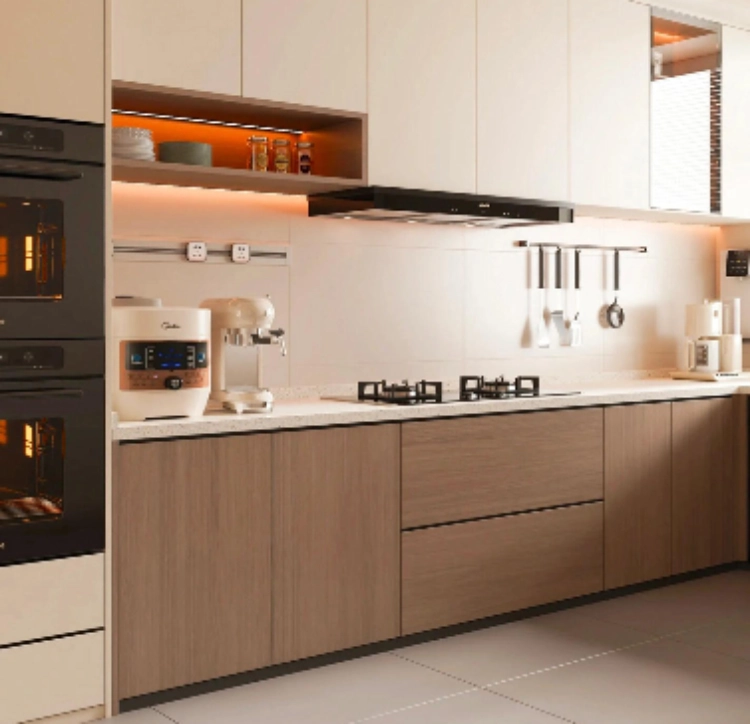
When making custom furniture we design and make it for a specific room, user or project. We can make it any width, height and depth, with any kind of storage, using any materials, with any kind of hardware and any finish. An example of custom furniture would be an built-in wardrobe along a wall, a kitchen cabinet designed around the user’s appliances and a reception counter with a fixed service area.
Custom does not automatically mean better. It means the specification is more specific. The quality still depends on the drawing, material, construction, finish, inspection, and installation process. A vague custom quotation can create more uncertainty than a clearly documented standard product.
What is ready-made furniture?
Ready-made furniture is produced in standard sizes and colors and can be ordered from stock or from ongoing production. This type of furniture includes dining chairs and tables, occasional tables, beds, sofas and other pieces of freestanding furniture. It is possible to see the finished article before you buy it and to replace it when it is no longer required, providing the article is still in production.
There is a trade-off with fixed geometry, for example a 420mm wide gap against a wall and a 500mm wide cabinet, either there is an overhang, the room is re-designed or another room item fills the space. These products are ideal when designed around the standard size of the item.
Space and fit: where custom furniture earns its place
Measure the room before you decide. Record finished floor levels, ceiling height, skirting, columns, windows, sockets, switches, pipes, air-conditioning units, and the opening path of every door. A plan that ignores these details can make a standard product look inexpensive until it reaches the site.
Custom furniture is strongest in spaces with one or more of these conditions:
- a narrow or irregular wall
- full-height storage that must meet the ceiling
- a corner that cannot accept a standard depth
- services or appliances that need planned access
- a repeated room type that needs consistent clearances
A custom wardrobe can use the last 80 mm beside a column, hide an uneven wall, or place drawers where the user can reach them. Those gains are practical, not decorative. They reduce dead space and make cleaning and daily movement easier.
Ready-made furniture fits well when the room has generous clearances and the item is meant to stand independently. It is also useful during a phased renovation, when you need a working desk, bed, or dining table before built-in work is complete.
Design consistency across a whole home
Whole-home projects often fail at the joins between trades. The kitchen uses a warm oak, the wardrobe uses a cooler oak, and the living-room cabinet introduces a third handle finish. Each item may look fine alone. Together, the house feels accidental.
Custom furniture gives you control over a shared palette. You can specify one board, veneer, paint, stone, metal finish, and handle family across fixed elements. Keep the finish schedule precise: name the supplier code, sheen, edge treatment, grain direction, and acceptable variation. Natural materials will vary; documenting that variation is more useful than promising identical pieces.
Ready-made furniture can still create a coherent home. Select a small number of repeatable forms and let custom built-ins carry the strongest visual line. For example, a ready-made dining table may work with a custom sideboard when the wood tone and metal finish are coordinated. The aim is a room that reads as one plan, not a collection of unrelated purchases.
Cost and lead time
Custom furniture usually costs more design and coordination time because each item requires drawings, approvals, material allocation, and project-specific production. It may also require a site measure before fabrication. Ready-made furniture can have a lower initial price and a shorter path to delivery when stock is available.
Unit price alone hides the real comparison. Add delivery, assembly, wall preparation, infill panels, scribing, hardware changes, storage, local taxes, and the cost of modifying a standard item. A ready-made cabinet that needs a filler, a replacement top, and extra site labour may no longer be the cheaper option.
Lead time is equally conditional. A custom item can be predictable when approvals are disciplined. A ready-made item can be slow when it is back-ordered, discontinued, or held for a consolidated shipment. Ask both suppliers for the date their quoted lead time starts, the approvals that stop the clock, and the fallback if a finish becomes unavailable.
For imported furniture, include packaging, shipping documents, customs, and last-mile handling in the programme. Your installer needs enough information to identify each piece and protect finished surfaces during movement through the house.
Quality, maintenance, and replacement
Custom furniture lets you choose construction details that matter in daily use: adjustable shelves, serviceable hinges, replaceable drawer runners, sealed edges near water, and access panels for equipment. Ask to see the internal construction in the sample or shop drawing. A smooth exterior does not tell you how a cabinet will age.
Ready-made furniture offers a different advantage: a known finished product. You can sit on the chair, test the drawer, and check the colour before ordering. Replacement is easier when the model has a stable product code. The risk is that a mass-produced finish or dimension may not be available when you need a second piece later.
For either route, write a care plan. Record the approved cleaning product, touch-up method, spare hardware, and the person responsible for storing extra material. If a household includes children, pets, humidity, or heavy rental use, tell the supplier before the specification is fixed.
A simple decision table
|
Project need |
Usually the better starting point |
Why |
|
Irregular wall or full-height storage |
Custom furniture |
Dimensions and infill can follow the room |
|
Furniture needed this week |
Ready-made furniture |
Stock can shorten the programme |
|
One palette across kitchens and wardrobes |
Custom furniture or coordinated package |
Finish and hardware can be scheduled together |
|
Freestanding piece that may move homes |
Ready-made furniture |
Easier to replace or relocate |
|
Many identical apartments |
Either, after a costed prototype |
Compare repeatability, packing, and installation |
|
Tight budget with flexible layout |
Ready-made furniture |
Standard sizes reduce design effort |
|
Long-term built-in storage |
Custom furniture |
Access, hardware, and internal layout can match use |
When a hybrid approach works best
A hybrid plan assigns each item to the route that solves its actual constraint. Start with fixed elements: kitchen cabinets, wardrobes, bathroom storage, media walls, and utility cupboards. Then review freestanding pieces such as beds, sofas, dining tables, occasional chairs, and lamps.
The mix can change by room. A villa may need custom wardrobes and a custom kitchen, ready-made beds and dining chairs, and a locally sourced sofa. An apartment developer may standardise wardrobes and kitchens while allowing buyers to select loose furniture from an approved range. A furnished rental may favour replaceable tables and chairs but still need built-ins that survive repeated turnover.
Document the interfaces. Note where a ready-made item meets a custom panel, how much tolerance the installer has, who protects the floor, and which party fixes a mismatch. One coordinated drawing can prevent two suppliers from each saying the other dimension is wrong.
How Winway handles whole-home customization
Winway’s website describes a service that connects design, material selection, production, logistics, and installation or on-site guidance. Its range includes kitchen cabinets, wardrobes, doors and windows, lighting, tiles, sanitary ware, marble, and related home-building products. This makes it relevant to buyers who want to coordinate several fixed elements through one project discussion.
The right next step is a room-by-room brief. Send plans, elevations, appliance information, dimensions, preferred finishes, quantities, destination, and the items you want to keep ready-made. Ask Winway to separate custom scope from standard products, show approval points, and list what the site team must prepare. Review the wardrobe and kitchen details first; they reveal whether the proposed process fits your home.
You can review Winway’s wardrobe range, service process, and project pages before requesting a quotation.
Custom furniture vs ready-made furniture FAQ
Is custom furniture more expensive?
It often has a higher unit price because it includes project-specific design, materials, and production. The total can still make sense when custom work removes unusable gaps, site modifications, or replacement work. Compare the complete installed cost and the time required from approval to use.
Does custom furniture take longer?
It can, especially when drawings, samples, site measurements, or imported materials are involved. A clear approval sequence makes the time easier to plan. Confirm the lead-time start date and the decisions that can delay production.
Is ready-made furniture lower quality?
No. Ready-made furniture can be well made and easy to inspect before purchase. Its suitability depends on construction, finish, use, and the fit of its standard dimensions in your room. Ask for the same care and material information you would request for a custom item.
Can custom and ready-made furniture use the same style?
Yes. Use a shared finish schedule, hardware family, proportions, and colour temperature. Allow for natural variation in wood and stone, then approve a sample so the relationship is clear before ordering.
Make the decision room by room
Choose custom furniture when the room, storage, or services create a real fit problem. Choose ready-made furniture when speed, mobility, stock, or replacement matters more. Use a hybrid plan when a whole home needs both precision and flexibility.
The decision is easier when every item has a dimension, finish, delivery assumption, and owner. Winway can then respond to a defined brief instead of guessing from inspiration images. That makes the quotation easier to compare and the final home easier to install and maintain.
